Press | Opera Reviews

A Program Built on ‘Pierrot Lunaire’
Sunday, March 5, 1989
By Michael Kimmelman
It is not hard to imagine what so impressed Stravinsky when he heard Schoenberg’s “Pierrot Lunaire” for the first time in the winter of 1912. Three-quarters of a century later, a listener can still be made to feel unsettled by the music’s urgency and strangeness.
The group of 21 “songs” (to be rendered in sprechstimme, or a kind of notated speech) is typically described as Expressionistic. But it will not necessarily strike a modern listener that way, at least not if the term is meant to imply a connection with paintings by Nolde or Kandinsky. Certainly in a performance like the one offered by the New York Chamber Ensemble and Lucy Shelton, the soprano, at Alice Tully Hall on Wednesday evening, it was another sense of “Pierrot” that obtained — one conforming more to Schoenberg’s injunction that the musicians sustain a “light, ironical, satirical tone.”
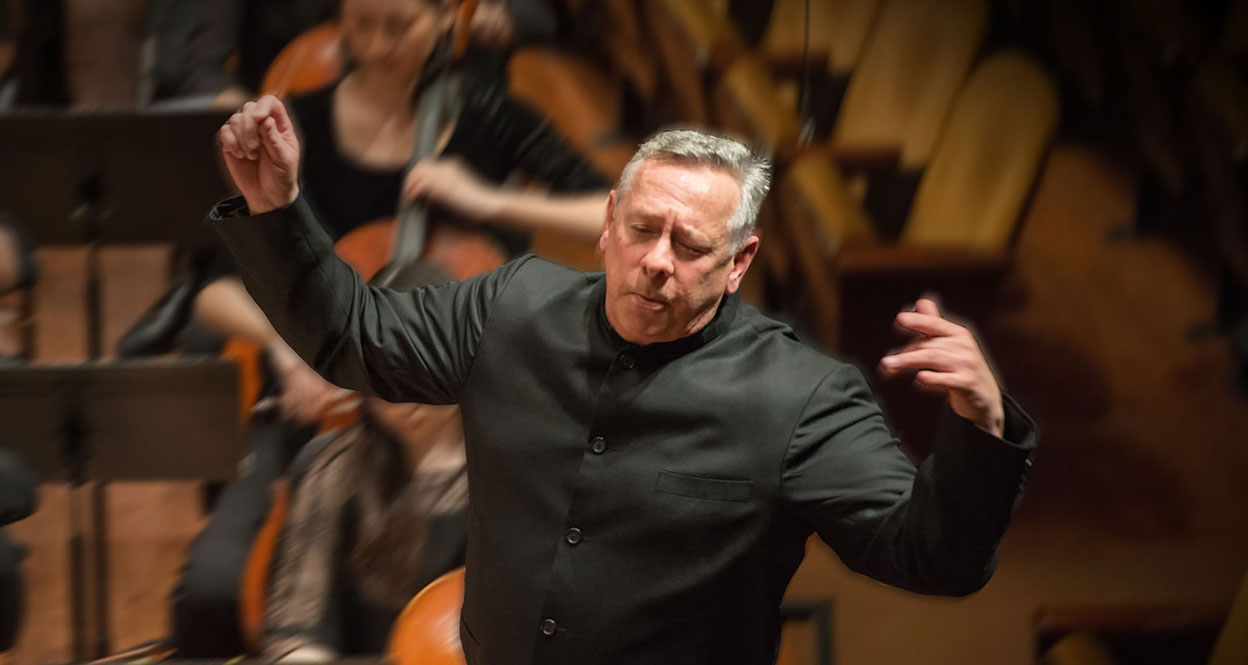
The Chester String Quartet and its guests — David Korevaar, pianist, and Bradley Garner and Alan R. Kay performing on several wind instruments — were under the baton of Stephen Rogers Radcliffe. The group placed itself at one side of the stage while Ms. Shelton sang on a platform at the other, giving to both soloist and ensemble an appropriately equal weight. There is something pristine and almost precious about this music, with its distilled and compact episodes. Mr. Radcliffe made his players pay close attention to the composer’s directions for detached notes, exactness of attack and a clarity of instrumental textures, all of which emphasized what a bizarre accompaniment Schoenberg has provided for Albert Giraud’s eerie and ruthless poems.
This was a fine, contained performance, even if Ms. Shelton, despite her easy tone and precision at conveying the mood of each piece, failed to project clearly more than a few words of Andrew Porter’s English translation from the German text.
“Pierrot” was the evening’s principal offering and its inspiration. The event re-created a program, conceived by Ravel 76 years ago but never realized. Having heard Schoenberg’s piece, Stravinsky composed a haiku-like set of “Three Japanese Lyrics,” utilizing the same configuration of instrumentalists. He spoke about “Pierrot” to Ravel, with whom he was then collaborating on the orchestration of Mussorgsky’s “Kovantchina,” and the Frenchman decided he would also try his hand at writing for a chamber group. “Trois Poèmes de Stéphane Mallarmé” was completed in 1913 and Ravel put forward the idea that it be performed alongside the pieces by Stravinsky and Schoenberg, with the evening rounded out by “Quatre Poèmes Hindous,” a set of songs by Maurice Delage, one of Ravel’s pupils and a friend of Stravinsky.
All the works are small, on the scale of Schoenberg’s songs for “Pierrot.” Stravinsky’s are the tiniest gems and they received on Wednesday evening two gentle run-throughs, the second even more playful and full of color than the first. One might have wished for overt sensuousness from Ms. Shelton in the Ravel and, in the Delage, some wonderment when delivering lines describing the birth of Buddha. There may not be quite the same swings of mood in these splendid miniatures as there are in “Pierrot,” but only a performer deploying a wide expressive range can do them full justice.