Press | Symphonic Review

Tuesday, June 6, 1995
Bachmann, Radcliffe et al provide sparkle to the Cape May Festival
By Ed Wismer
CAPE MAY — As with past years, the Cape May Music Festival 1995 edition is a gala celebration of great music, and on Wednesday, May 31 we were fortunate enough to witness a fantastic performance of Piotr Tchaikovsky’s Violin Concerto in D and the Mozart Symphony No. 39 in E flat.
The featured soloist in the Tchaikovsky concerto was violin virtuoso Maria Bachmann, with Stephen Rogers Radcliffe and the Cape May Festival Orchestra.
Ms. Bachmann is about to hit the big time of concert artists by virtue of a management contract with Columbia Artists and has been recommended by Leonard Slatkin, conductor of the National Symphony in Washington D.C.
She has performed with the South Jersey Symphony and the Bridgeton Symphony, but will now enter a new high-profile phase of her career.
The Tchaikovsky concerto evokes mental pictures of the majesty of czarist Russia contrasted with the wildly energetic gyrations of peasant dancing.
Anyone cognizant of Slavic culture finds the elegance and vigor of the music entrancing; anyone familiar with great violin masterpieces knows that this concerto is no exercise for beginners.
The concerto had to run a fierce gauntlet of fault finding when it was introduced in 1881 by the Vienna Philharmonic with Adolf Brodsky as soloist and Hans Richter on the podium. It was butchered by critic Eduard Hanslick and even Tchaikovsky’s patroness Nadezda von Meck was highly critical of the first movement. Some violinists of the day called it unplayable, but even with its minefield of difficult passages, it is only second to the Mendelssohn concerto in popularity with violinists and audiences today. Time has given Tchaikovsky his revenge.
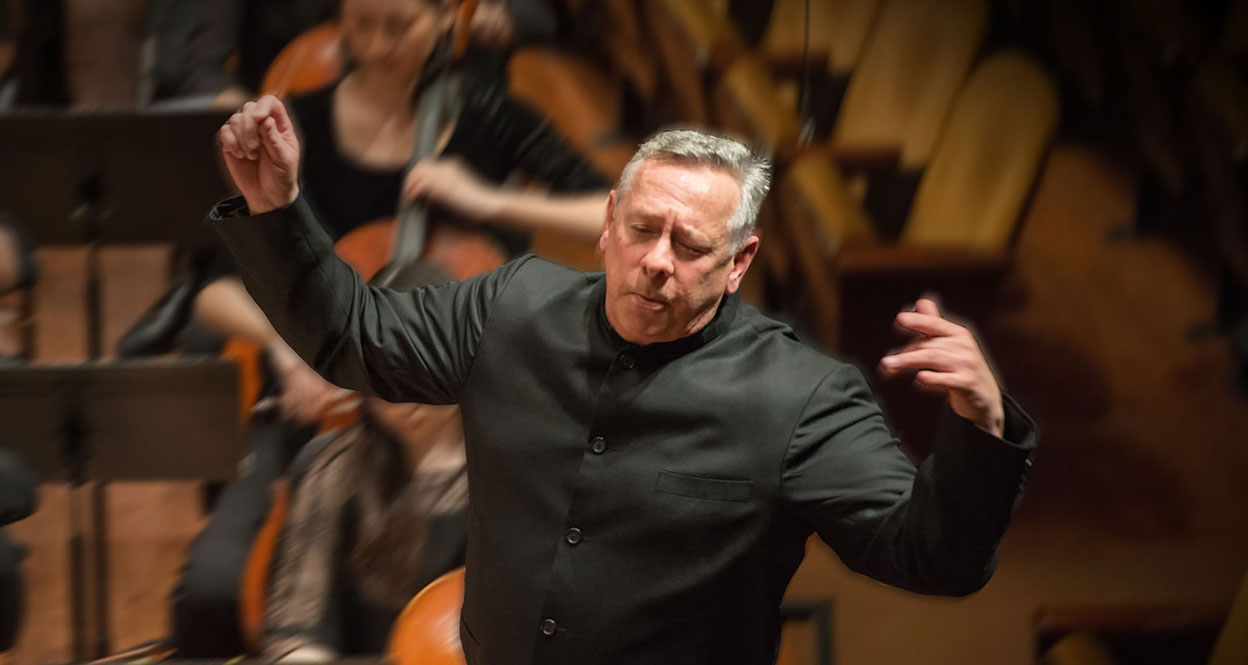
The Cape May Festival Orchestra has the discipline, economy and responsiveness to Radcliffe’s excellent conducting to bring off even the uneven tempo of the scherzo movement of the Brahms and later to be equally effective in Tchaikovsky and Mozart.
Stephen Rogers Radcliffe’s cohorts did a magnificent job on the Variations complex score. Brahms probably wrote some of his best for woodwinds and that section of the orchestra often provides the identifying Brahms sound.
The Cape May Festival Orchestra has the discipline, economy and responsiveness to Radcliffe’s excellent conducting to bring off even the uneven tempo of the scherzo movement of the Brahms and later to be equally effective in Tchaikovsky and Mozart.
Maria Bachmann’s association with Columbia Artists began at midnight after her bravura performance of the Tchaikovsky violin concerto was completed with a flair and strength that seemed phenomenal for one so slightly built. She is a powerful performer and her opening statement of the initial theme informed the audience that she was not a lightweight by any measure.
There was a perfect amalgam between her and the orchestra; the only disappointment for us was a slight letdown in the second movement of the concerto. In the finale (a wild dance), Bachmann was ready to join the ranks of Szigeti, Morini and other female violinists who give the boys a run for their money.
Radcliffe’s reading of the Mozart symphony was right on the money and the final allegro echoed the good-humored portions of the film Amadeus.
We believe the 33-piece orchestra of incredibly gifted young musicians is the best the festival has ever assembled. Personnel changes from year to year are inevitable but there seems to be an unending supply of accomplished youngsters forthcoming annually from conservatories.
We hope that they continue to find steady employment in the field that they obviously love.
— Ed Wismer
![THE SENTINEL-LEDGER Ocean City, N.J. Week of 7-13 June 1994 Festival Orchestra goes pops By ED WISMER Sentinel-Ledger Critic OCEAN CITY — The second Cape May Music Festival event to be held on the Music Pier for 1994 took place June 4 and it was a real "Popper." The Cape May Festival Orchestra played a program of light classics and the best of Broadway. This does seem like carrying coals to Newcastle because of the similarity of programming by our own sensational Ocean City Pops, but good music is sempiternal and it's truly a case of the more, the merrier. It best represents another opportunity to spread culture in this area through cooperation by the Pashley Insurance Agency, The Sentinel-Ledger and the city of Ocean City. All concerned are to be commended for their support of the arts. The Festival Orchestra had the pleasure and privilege of playing in Ocean City's state of the art facility. Festival artistic director Stephen Rogers Radcliffe mounted the podium and started the proceedings off with a flourish. Pops orchestras and programs are proliferating exponentially. Most of us think of Pops orchestras starting with that part-time fireman Arthur Fiedler up in Boston, but pops programing was quite popular at the turn of the 20th century and before. A Sousa program would have consisted of light classics, popular songs and show tunes (many of which Sousa wrote himself a la John Williams). We have heard Radcliffe's orchestra do some very ambitious work in the past and recall an occasion when a 19th century synthesizer was used to intensify the sound. Radcliffe is experimental and innovative in his approach and one can always expect some extra pyrotechnics. He did not disappoint us this time either. The program consisted of works inspired by folk music and dance that was multi-ethnic. Radcliffe led off with a Rossini Overture that was impressively played and followed it with Dvorak's Slavonic Dance Op. 46, No. 8 (one of the more lively numbers in this evocative suite). > Artistic Director Stephen Rogers Radcliffe is fun to watch > Radcliffe is fun to watch. His kinetic gyrations were most evident in the Dvorak but he only enlivens proceedings thusly when it is appropriate. The late Dmitri Mitroupolis was overly physical and often fell right off the podium. Radcliffe's feet enthusiastically left the floor at times but he was always in control. Ralph Vaughan Williams' Fantasia on Greensleeves followed it, and along with Faure's Pavane Op. 50, brought a more solemn and sedate mood to the concert. The wind section was outstanding in these two pieces. An unfamiliar tarantelle by Camille Saint Saens proved to be a lively and lovely example of how versatile the French composer could be. The Bizet Suite from Carmen featured "just right" vigorous tempi and playing that was, at the same time, abandoned and precise. The brass players took full advantage of Bizet's proclivity for writing superbly for their instruments. The final portion of the program consisted of two genuine Broadway classics in the form of selections from Gershwin's folk opera Porgy and Bess and Bernstein's West Side Story highlights. Both came in the form of fresh sounding and unfamiliar arrangements that featured innovative instrumental scoring that gave them new life. These evinced a standing ovation which was rewarded with an encore of Flimsy Korsetoff's (pardon an old musician's pun) Flight of the Bumble Bee which hummed right along. It is a certainty that the audience felt that it had a grand night out, topped off with truly professional musicianship and the sponsors could openly glow with pride. The whole affair added new vistas of cultural excellence that upheld the tradition of fine entertainment values exemplified by both cities. [Sidebar Text] CAPE MAY — The fifth annual Cape May Music Festival began May 15 and continues through June 26, hosting what is described as some of the world's most accomplished soloists and chamber musicians in music from the Renaissance and Vivaldi to the jazz era. The Festival Orchestra is conducted by Stephen Rogers Radcliffe. The festival is sponsored by the Mid-Atlantic Center for the Arts (884-5404), in association with the Cape May Institute.](https://stephenrogersradcliffe.com/wp-content/uploads/1994/06/1994_06_07_Sentinel_Ledger_June_7_1994-791x1024.jpg)