Press | Recording Review
March/April 1996 • Volume 19, Number 4
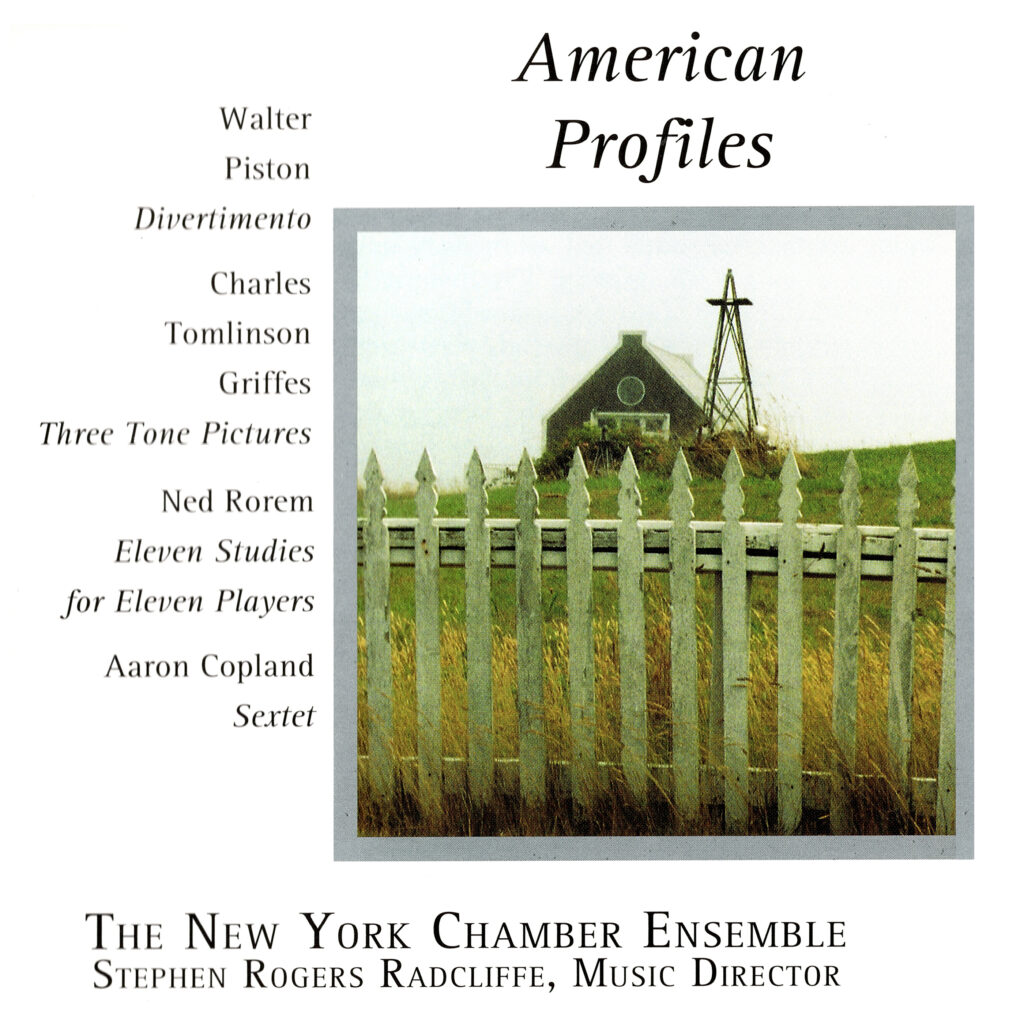
AMERICAN PROFILES
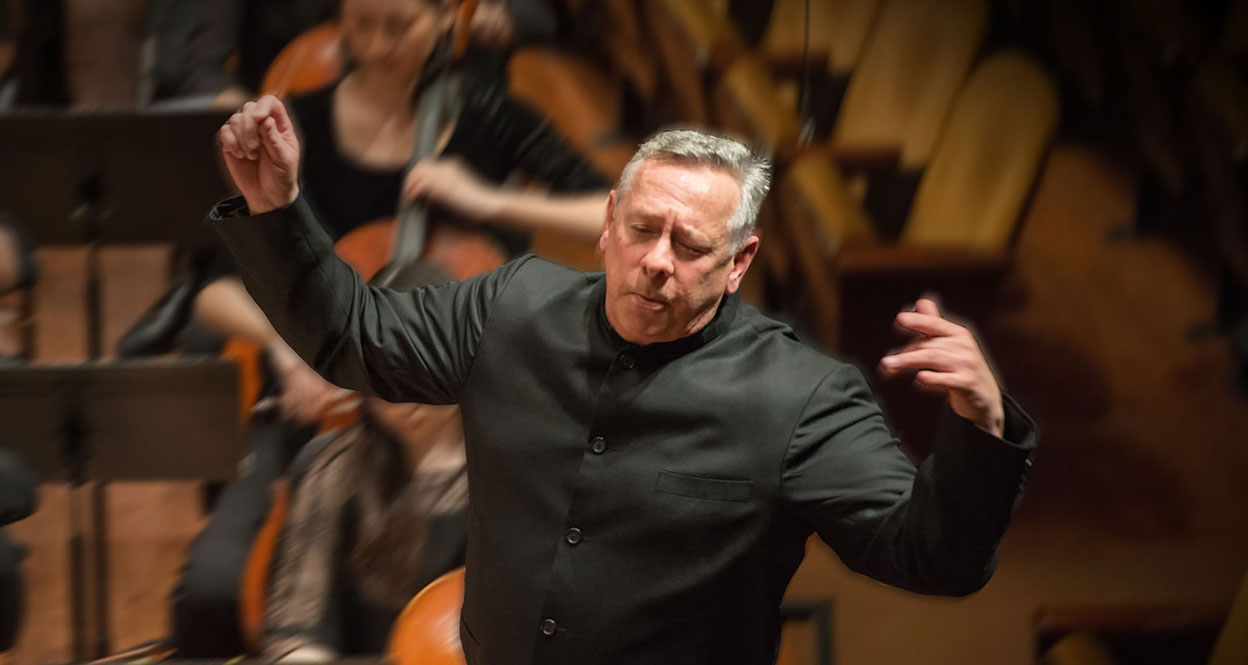
Stephen Rogers Radcliffe conducting the New York Chamber Ensemble
ALBANY TROY 175 [DDD]; 64:26.
PISTON: Divertimento
GRIFFES: Three Tone Pictures
ROREM: Eleven Studies for Eleven Players
COPLAND: Sextet
By Richard Burke
While each of these pieces has been recorded before—all but the Piston currently have at least one recording in the catalog—it was an excellent idea to bring all four together on a single disc. They work together extremely well because of their differences as much as because of what they have in common. Piston’s three-movement Divertimento is, like all of this composer’s music, a sturdily crafted work in which strong, memorable thematic material is supported by solid, occasionally dissonant counterpoint. The two lively, thoroughly neo-classical outer movements surround a central slow movement based on a wonderful, flowing oboe melody. The Griffes pieces, arranged by the composer from his original version for piano, are attractive little landscapes, featuring the composer’s special brand of impressionism. Rorem’s Studies are a series of miniatures, varying widely in mood as well as instrumentation, that show the composer’s fine sense of detail, wry sense of humor, and irrepressible melodic gift. The final work, Copland’s own arrangement of his Short Symphony, is a masterpiece of American neo-Classicism. Nervous, muscular, and economical, the brief three-movement work is one of Copland’s most rhythmically challenging pieces.
The performances are very good. The bouncy vitality of the Copland and Piston works is particularly well captured by Radcliffe and his excellent musicians. The Rorem pieces are played with lots of detail and show off individual members of the ensemble to great advantage. My only reservations concern the Griffes pieces where the beat seems all too heavy and the instrumental blends a bit rough. In addition, the piano, although nicely played by David Korevaar, is overly prominent, suggesting more a concerto than a work for chamber orchestra. The recording is good, quite clean and natural, but a little bit close. These flaws aside, this is a most enjoyable disc that should find a welcome place in every collection of American music.
![Fanfare The Magazine for Serious Record Collectors March/April 1996 • Volume 19, Number 4 AMERICAN PROFILES. Stephen Rogers Radcliffe conducting the New York Chamber Ensemble. ALBANY TROY 175 [DDD]; 64:26. PISTON: Divertimento. GRIFFES: Three Tone Pictures. ROREM: Eleven Studies for Eleven Players. COPLAND: Sextet. While each of these pieces has been recorded before—all but the Piston currently have at least one recording in the catalog—it was an excellent idea to bring all four together on a single disc. They work together extremely well because of their differences as much as because of what they have in common. Piston’s three-movement Divertimento is, like all of this composer’s music, a sturdily crafted work in which strong, memorable thematic material is supported by solid, occasionally dissonant counterpoint. The two lively, thoroughly neo-classical outer movements surround a central slow movement based on a wonderful, flowing oboe melody. The Griffes pieces, arranged by the composer from his original version for piano, are attractive little landscapes, featuring the composer’s special brand of impressionism. Rorem’s Studies are a series of miniatures, varying widely in mood as well as instrumentation, that show the composer’s fine sense of detail, wry sense of humor, and irrepressible melodic gift. The final work, Copland’s own arrangement of his Short Symphony, is a masterpiece of American neo-Classicism. Nervous, muscular, and economical, the brief three-movement work is one of Copland’s most rhythmically challenging pieces. The performances are very good. The bouncy vitality of the Copland and Piston works is particularly well captured by Radcliffe and his excellent musicians. The Rorem pieces are played with lots of detail and show off individual members of the ensemble to great advantage. My only reservations concern the Griffes pieces where the beat seems all too heavy and the instrumental blends a bit rough. In addition, the piano, although nicely played by David Korevaar, is overly prominent, suggesting more a concerto than a work for chamber orchestra. The recording is good, quite clean and natural, but a little bit close. These flaws aside, this is a most enjoyable disc that should find a welcome place in every collection of American music. Richard Burke](https://stephenrogersradcliffe.com/wp-content/uploads/1996/03/Fanfare_Magazine_April_1996-791x1024.jpg)