
Skip to content

Press | Recording Review
June 2001

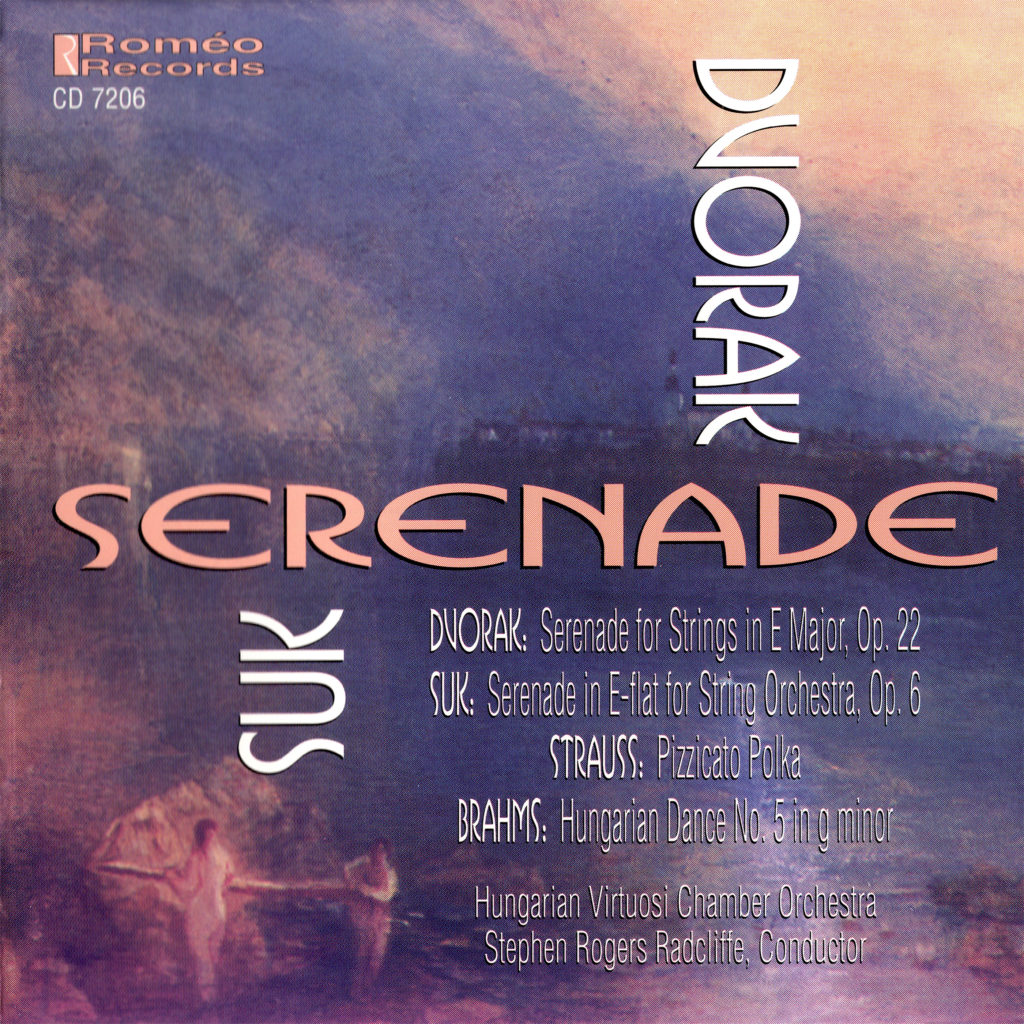
ANTONÍN DVOŘÁK
Serenade for Strings

JOSEPH SUK
Serenade in E-flat

JOHANN STRAUSS JR.
Pizzicato Polka

JOHANNES BRAHMS
Hungarian Dance No. 5

Hungarian Virtuosi Chamber Orchestra
Stephen Rogers Radcliffe

Romeo – 7206 (CD)

Reference Recording – Dvořák: Wolff/Teldec; Suk: Belohlávek
By Victor Carr Jr.

This is an exceptionally fine string orchestra disc. Although Dvořák’s Serenade for Strings certainly does not want for excellent interpretations—Karajan with the Berlin Philharmonic and Hugh Wolff with the St. Paul Chamber Orchestra, for example—but Stephen Rogers Radcliffe’s approach is so fresh, his rubato so natural and sensitive, and his instinct for the music’s Czech essence so true that you come away not wanting to hear anybody else’s. When is the last time you heard the Waltz movement start with a slight hesitation in the tempo, and then organically pick up speed as the phrase continues? How often do you hear the beautiful Larghetto so lovingly caressed, or the finale’s note values so scrupulously observed that they give the music an added zing? Rogers Radcliffe is exceptionally attentive to the music’s vertical dimension, drawing a remarkably sonorous yet clearly detailed sound from the Hungarian Virtuosi Chamber Orchestra. Listen to the burnished tone of those sustained double bass notes in the first movement. Delicious!
These same qualities are found in Josef Suk’s delightful Serenade in E-flat, where Rogers Radcliffe’s lightness and sensitivity to nuance provides a marked contrast to Belohlávek’s comparatively more measured performance with the much richer sounding Czech Philharmonic strings—nowhere more so than in the slow movement, where the added intimacy of the smaller Hungarian band creates an atmosphere of such intense beauty you wish it would never end. The remaining items, fetching renditions of Strauss’ Pizzicato Polka and Brahms’ Hungarian Dance No. 5, give these marvelous musicians yet another opportunity to strut their stuff. Czech music and string orchestra fans shouldn’t even think of not buying this one, and the richly resonant recording fully supports the beauty of the playing.

Your Online Guide to Classical Music ClassicsToday.com JUNE, 2001 ANTONÍN DVOŘÁK Serenade for Strings JOSEPH SUK Serenade in E-flat JOHANN STRAUSS JR. Pizzicato Polka JOHANNES BRAHMS Hungarian Dance No. 5 Hungarian Virtuosi Chamber Orchestra Stephen Rogers Radcliffe Romeo - 7206 (CD) Reference Recording - Dvořák: Wolff/Teldec; Suk: Belohlávek Artistic Quality 10 / 10 Sound Quality This is an exceptionally fine string orchestra disc. Although Dvořák's Serenade for Strings certainly does not want for excellent interpretations—Karajan with the Berlin Philharmonic and Hugh Wolff with the St. Paul Chamber Orchestra, for example—but Stephen Rogers Radcliffe's approach is so fresh, his rubato so natural and sensitive, and his instinct for the music's Czech essence so true that you come away not wanting to hear anybody else's. When is the last time you heard the Waltz movement start with a slight hesitation in the tempo, and then organically pick up speed as the phrase continues? How often do you hear the beautiful Larghetto so lovingly caressed, or the finale's note values so scrupulously observed that they give the music an added zing? Rogers Radcliffe is exceptionally attentive to the music's vertical dimension, drawing a remarkably sonorous yet clearly detailed sound from the Hungarian Virtuosi Chamber Orchestra. Listen to the burnished tone of those sustained double bass notes in the first movement. Delicious! These same qualities are found in Josef Suk's delightful Serenade in E-flat, where Rogers Radcliffe's lightness and sensitivity to nuance provides a marked contrast to Belohlávek's comparatively more measured performance with the much richer sounding Czech Philharmonic strings—nowhere more so than in the slow movement, where the added intimacy of the smaller Hungarian band creates an atmosphere of such intense beauty you wish it would never end. The remaining items, fetching renditions of Strauss' Pizzicato Polka and Brahms' Hungarian Dance No. 5, give these marvelous musicians yet another opportunity to strut their stuff. Czech music and string orchestra fans shouldn't even think of not buying this one, and the richly resonant recording fully supports the beauty of the playing. —Victor Carr Jr.
×