Press | Symphonic Reviews

Friday, October 22, 2004
Bass Clarinet Shines in Smart Concerto
By Tom Strini
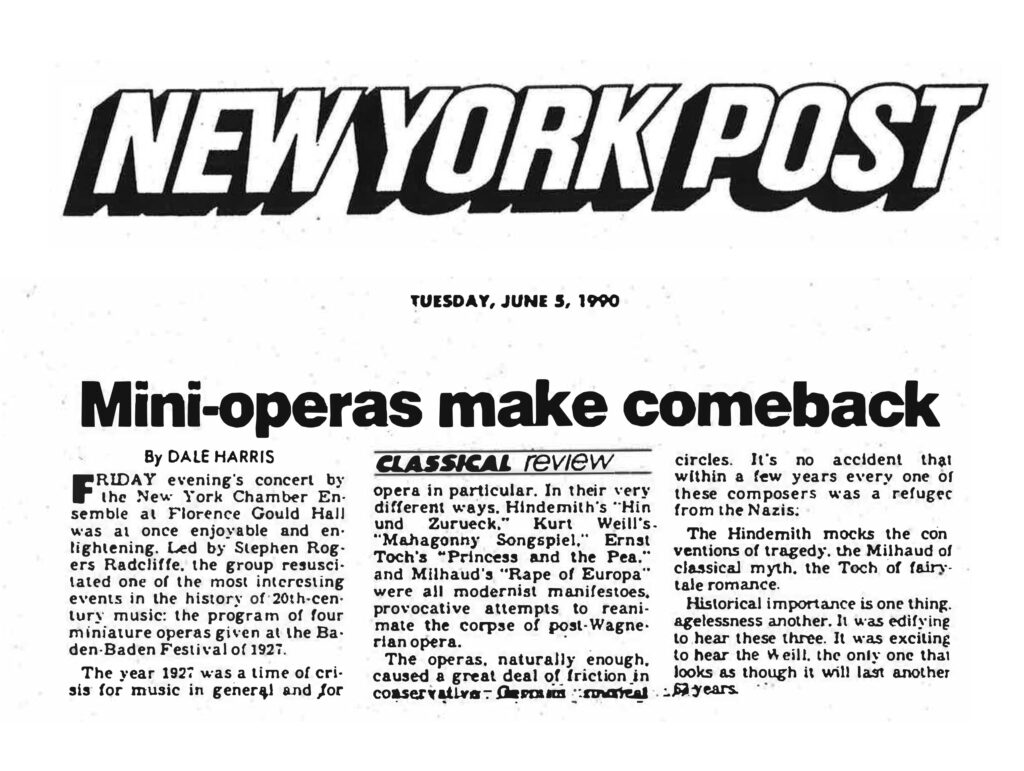
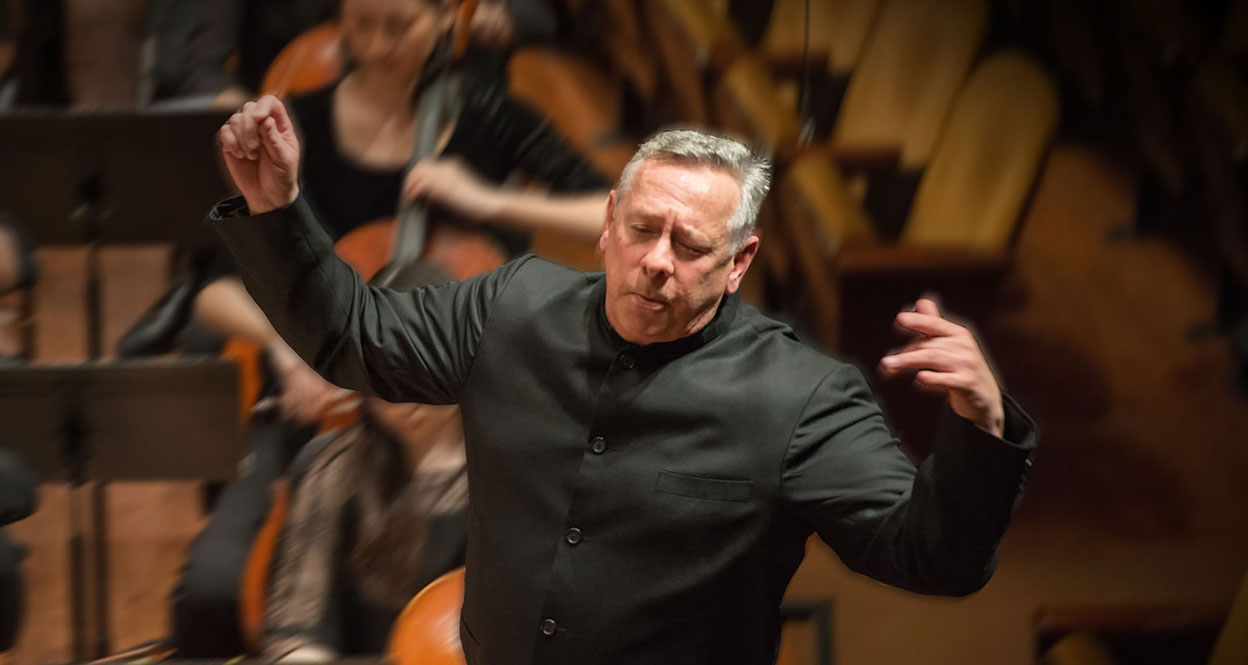
Stephen Rogers Radcliffe, guest conductor and certain candidate for the open Milwaukee Chamber Orchestra podium job, presided over an exceptionally engaging MCO program Thursday evening at Wisconsin Lutheran College.
The centerpiece was the premiere of James Grant’s Concerto for Bass Clarinet and Strings, commissioned and performed by William Helmers of the MCO. Grant exploits all of Helmers’ great skill and the virtuosic potential of this instrument, which appears so rarely in the solo spotlight.
But this concerto is more than a showcase for Helmers and the bass clarinet. Grant here has made music that is structurally smart, emotionally probing, rhythmically clever and harmonically subtle.
The clarinet darts about the strings like a bird in a forest in the first movement, “Levity.” In the second, Grant casts the soloist as a lonely wanderer speaking a soliloquy in a landscape of Impressionist chords. Any one of those harmonies is gentle and beautiful, but they slowly gather surprising climactic force. The wrenching climax justifies Grant’s long, melancholy denouement. Strings and woodwind scamper and chase through the lively, ever-unfolding melodies of the finale, “Emphasis,” which is more than a mindless romp. The momentum builds to some hair-raising hyena howls that had the audience howling back in approval when the 15-minute concerto ended.
Helmers wasn’t the only soloist to succeed in a big way Thursday. Harpist Danis Kelly played Debussy’s “Danses sacrée et profane” with sensitivity and panache. Her finely shaded touch and dynamics gave each chord vivid, distinct presence in the Schwan Concert Hall, the perfect venue for Debussy’s shimmering sonorities.
Radcliffe and the orchestra framed both soloists beautifully. Balanced, well-tuned string playing lit up Debussy’s chords, and Radcliffe and the orchestra showed an easy command of Grant’s tricky rhythms.
They framed the program with Serenades for Strings by Dvorak (Opus 22 in E) and one of his prize students, Josef Suk (Opus 6 in E-flat).
The Dvorak was a little bland under Radcliffe’s baton. And I wish he’d at least lifted a finger to try to sort out the all-too-predictable messiness that cropped up in the more intricate passages for the violins in both Serenades.
But Radcliffe did well overall and showed particular sympathy for Suk’s restless, chromatic harmonies and searching, sprawling melodies. He heard the drama and made it gripping.