Press | Symphonic Reviews

Monday, April 9, 1990
An Homage to a Teacher
By Peter Goodman
AMERICANS IN PARIS: STUDENTS OF NADIA BOULANGER.
Music by Aaron Copland, Roy Harris, David Diamond, Ned Rorem. New York Chamber Ensemble (Chester String Quartet, Hexagon), Stephen Rogers Radcliffe, conductor. Friday night. Florence Gould Hall, Alliance Francaise, 55 E. 59 St., Manhattan.
THE MARK OF the great teacher is her ability to help the pupil be himself, not merely an image of the mentor.
Nadia Boulanger was that sort of teacher. Renowned in the American musical world as the French pedagogue around whom gathered generations of aspiring composers from Virgil Thomson to Philip Glass, it is clear that whatever she taught them, she did not force them into her own mold.
On Friday night, the New York Chamber Ensemble, an ambitious young group that includes a string quartet, a wind ensemble and other musicians, presented an attractive program devoted to the work of four of Boulanger’s students. It was an evening of prima facie evidence that whatever Nadia Boulanger did, she didn’t distort the voices of Aaron Copland, Roy Harris, David Diamond or Ned Rorem. Indeed, only Rorem, the youngest of the four composers, could be said to speak in French.
The program opened with two works for clarinet, piano and string quartet: Copland’s Sextet, a reworking of his “Short Symphony,” and Harris’ Concerto for Clarinet, Piano and Strings. Their only similarity was the instrumentation.
Copland created the Sextet in 1937 after failing to gain performances of the “Short Symphony,” completed in 1933. Although written in his artistic rather than populist style, the similarities between the composer’s two voices are plain: harmonies of seconds and ninths, electric rhythms, lovely writing for clarinet, bursts of lyricism squeezed between dense blocks of sound. It’s the work of a master, and the Chester String Quartet (part of the ensemble) played with an ease that belied all the difficulty musicians found with the work 45 years ago.
Harris’ concerto is immediately more lyrical and elegiac, with its slow, deep introduction on clarinet and piano, and its long, singing lines. If Copland was a tough city kid, Harris was a singer from the country. The concerto is full of richness, both harmonic and contrapuntal, and a sense of ease not found in Copland. Ultimately, the concerto is too relaxed and doesn’t keep the listener involved.
The second half included David Diamond’s Concerto for Chamber Orchestra, written in 1940, and Ned Rorem’s Eleven Studies for Eleven Players. The Diamond was the most awkward piece on the program, straightforward, with square rhythms and steady pulse and a sense of self-conscious seriousness that kept it from coming alive. Only during the two sprightly, dancing fugues did one hear what seemed to be the composer’s natural voice.
Rorem, of course, has never hidden his natural voice, witty, epigrammatic, cool and lyrical — French. In the Eleven Studies, various combinations of strings, winds, brass and percussion sing, dance, joke or whisper mysteriously, an exquisite platter of aural hors d’oeuvres.
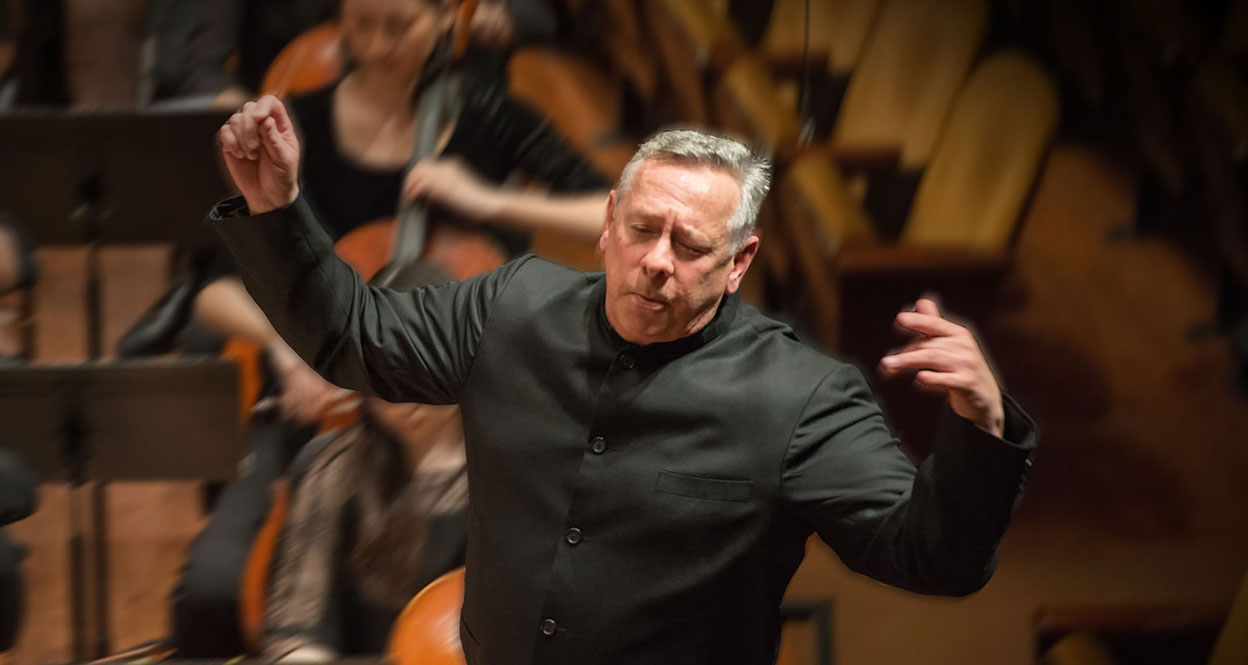
The performances were fine, crisp and lively, particularly the playing of trumpeter Stephen Burns, oboist Matthew Dine and pianist David Korevaar. Steven Rogers Radcliffe conducted.
The concert, by the way, was part of a series in Florence Gould Hall, an excellent chamber two stories below ground level at the Alliance Francaise on East 59th Street. It’s a hall that deserves more activity. / II
![New York Newsday Monday, April 9, 1990 Stephen Rogers Radcliffe, Conductor MUSIC REVIEW An Homage to a Teacher AMERICANS IN PARIS: STUDENTS OF NADIA BOULANGER. Music by Aaron Copland, Roy Harris, David Diamond, Ned Rorem. New York Chamber Ensemble (Chester String Quartet, Hexagon), Stephen Rogers Radcliffe, conductor. Friday night. Florence Gould Hall, Alliance Francaise, 55 E. 59 St., Manhattan. By Peter Goodman THE MARK OF the great teacher is her ability to help the pupil be himself, not merely an image of the mentor. Nadia Boulanger was that sort of teacher. Renowned in the American musical world as the French pedagogue around whom gathered generations of aspiring composers from Virgil Thomson to Philip Glass, it is clear that whatever she taught them, she did not force them into her own mold. On Friday night, the New York Chamber Ensemble, an ambitious young group that includes a string quartet, a wind ensemble and other musicians, presented an attractive program devoted to the work of four of Boulanger's students. It was an evening of prima facie evidence that whatever Nadia Boulanger did, she didn't distort the voices of Aaron Copland, Roy Harris, David Diamond or Ned Rorem. Indeed, only Rorem, the youngest of the four composers, could be said to speak in French. The program opened with two works for clarinet, piano and string quartet: Copland's Sextet, a reworking of his "Short Symphony," and Harris' Concerto for Clarinet, Piano and Strings. Their only similarity was the instrumentation. Copland created the Sextet in 1937 after failing to gain performances of the "Short Symphony," completed in 1933. Although written in his artistic rather than populist style, the similarities between the composer's two voices are plain: harmonies of seconds and ninths, electric rhythms, lovely writing for clarinet, bursts of lyricism squeezed between dense blocks of sound. It's the work of a master, and the Chester String Quartet (part of the ensemble) played with an ease that belied all the difficulty musicians found with the work 45 years ago. Harris' concerto is immediately more lyrical and elegiac, with its slow, deep introduction on clarinet and piano, and its long, singing lines. If Copland was a tough city kid, Harris was a singer from the country. The concerto is full of richness, both harmonic and contrapuntal, and a sense of ease not found in Copland. Ultimately, the concerto is too relaxed and doesn't keep the listener involved. The second half included David Diamond's Concerto for Chamber Orchestra, written in 1940, and Ned Rorem's Eleven Studies for Eleven Players. The Diamond was the most awkward piece on the program, straightforward, with square rhythms and steady pulse and a sense of self-conscious seriousness that kept it from coming alive. Only during the two sprightly, dancing fugues did one hear what seemed to be the composer's natural voice. Rorem, of course, has never hidden his natural voice, witty, epigrammatic, cool and lyrical — French. In the Eleven Studies, various combinations of strings, winds, brass and percussion sing, dance, joke or whisper mysteriously, an exquisite platter of aural hors d'oeuvres. The performances were fine, crisp and lively, particularly the playing of trumpeter Stephen Burns, oboist Matthew Dine and pianist David Korevaar. Steven Rogers Radcliffe conducted. The concert, by the way, was part of a series in Florence Gould Hall, an excellent chamber two stories below ground level at the Alliance Francaise on East 59th Street. It's a hall that deserves more activity. / II [Caption under photo: Stephen Rogers Radcliffe conducted the works composed by Nadia Boulanger's students.]](https://stephenrogersradcliffe.com/wp-content/uploads/1990/04/1990_09_04_NY_Newsday_April_9_1990-791x1024.jpg)