Press | Symphonic Reviews

Tuesday, March 20, 1990
Radcliffe Leads Young Virtuosos
By John S. Sweeney, Music Critic
What is happening to the musical training of today’s young people?
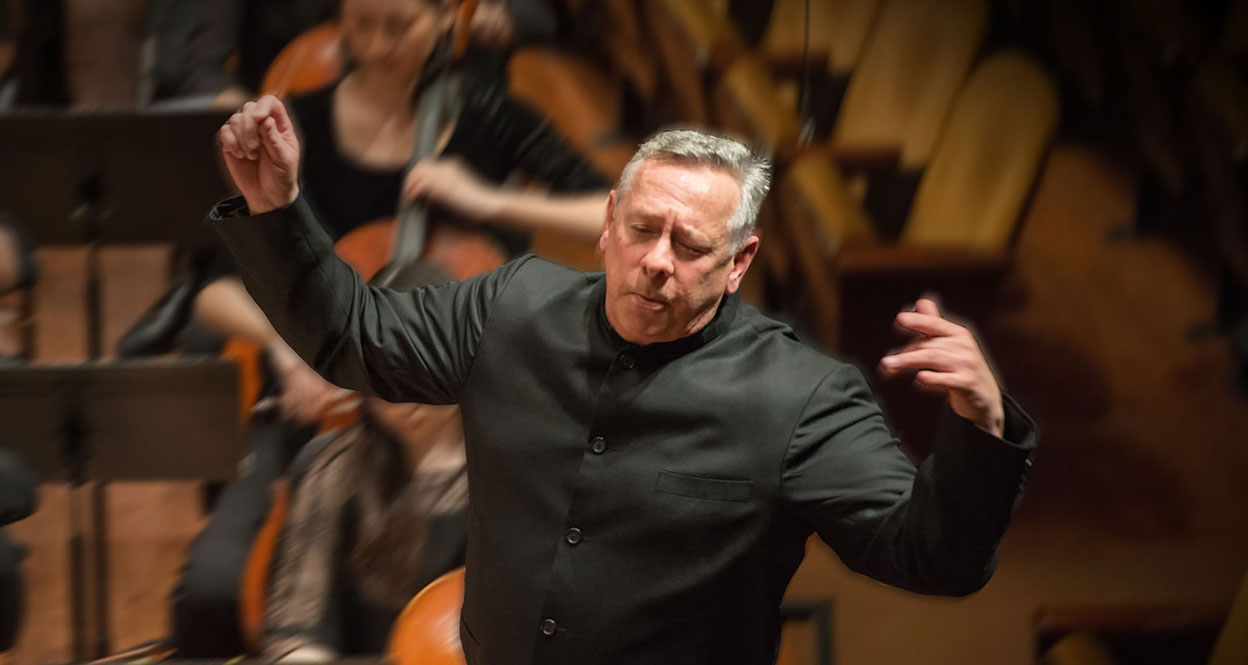
Truly astonishing things, the Rondo Chamber Orchestra demonstrated Sunday afternoon at the Norwalk Concert Hall. Four virtuosos, none over 15 years of age, conducted by Stephen Radcliffe, already a veteran at 29, made remarkable music together.
Radcliffe, who already has made his mark as a youthful conductor to watch, is a native of Greenwich and received his early musical training in the Greenwich public schools.
What impressed most on Sunday was not the technical skills of the players, although they were of the highest order, but the real understanding of the music they performed. One would not expect musicians so young to grasp the subtleties of Bach, Haydn or Mozart as fully as did these performers.
The youthful artists all played a full-length concerto, thus giving them a complete performing experience and their audience the opportunity to become fully acquainted with their musicianship.
A sterling performance of Bach’s D minor Concerto for two violins by two pupils of Alfred Markov, founder of Rondo, opened the program. Both 15 years old, Leonard Primak was born in Kiev and Gregory Kalinovsky in Leningrad.
Their schooling was of the most solid discipline, with intonation, bowing, and dynamics all first rate. Radcliffe focused his ensemble with knowing craft, conducting with an easy, flowing style that brought rhythmic vitality and dynamic balances into place.
Things got even better with Taiwan-born Kenneth Kuo, also 15, in Haydn’s C major cello concerto. Kuo played with admirable security, executing the treacherous passages in thumb position with excellent intonation and control of bowing with a focused, well-rounded tone.
His understanding of the slow movement, his sense of phrasing, his splendid balance with the orchestra, and the elan of his finale, making no concessions to difficulties, all belied his youth.
Radcliffe drew from his orchestra a refined and stylistically impeccable accompaniment. His discerning sense of balance allowed his soloist to play his virtuoso passages without forcing the tone, yet provided solid support when required.
Janacek’s early work for strings, “Idyll,” made an excellent foil on an otherwise baroque and classical program. Radcliffe extracted three contrasting movements from the work, each with an individual Slavic charm.
His conducting was simple, technically skillful and idiomatically expressive without any trace of exaggeration or distortion.
Alisa Kaplan, an engaging and self-possessed 12-year-old, stole the show with her surprisingly mature performance of Mozart’s A major Piano Concerto, K. 414. Struggling with a less-than-perfect Steinway grand, her technical skills were superior and her style absolutely correct.
She played her cadenzas with a remarkable understanding of their improvisational nature. Her rhythm never faltered even when, here and there, no doubt because of the jitters, a memory lapse occured.
The accompaniment by the orchestra was commendable in its grace and dynamic control. Radcliffe followed his soloist’s stylistic intentions with perfect faithfulness.
![The ADVOCATE SERVING THE COMMUNITY SINCE 1829 • STAMFORD, CONNECTICUT • TUESDAY, MARCH 20, 1990 Radcliffe leads young virtuosos By John S. Sweeney Music Critic What is happening to the musical training of today's young people? Truly astonishing things, the Rondo Chamber Orchestra demonstrated Sunday afternoon at the Norwalk Concert Hall. Four virtuosos, none over 15 years of age, conducted by Stephen Radcliffe, already a veteran at 29, made remarkable music together. Radcliffe, who already has made his mark as a youthful conductor to watch, is a native of Greenwich and received his early musical training in the Greenwich public schools. What impressed most on Sunday was not the technical skills of the players, although they were of the highest order, but the real understanding of the music they performed. One would not expect musicians so young to grasp the subtleties of Bach, Haydn or Mozart as fully as did these performers. The youthful artists all played a full-length concerto, thus giving them a complete performing experience and their audience the opportunity to become fully acquainted with their musicianship. A sterling performance of Bach's D minor Concerto for two violins by two pupils of Alfred Markov, founder of Rondo, opened the program. Both 15 years old, Leonard Primak was born in Kiev and Gregory Kalinovsky in Leningrad. Their schooling was of the most solid discipline, with intonation, bowing, and dynamics all first rate. Radcliffe focused his ensemble with knowing craft, conducting with an easy, flowing style that brought rhythmic vitality and dynamic balances into place. Things got even better with Taiwan-born Kenneth Kuo, also 15, in Haydn's C major cello concerto. Kuo played with admirable security, executing the treacherous passages in thumb position with excellent intonation and control of bowing with a focused, well-rounded tone. His understanding of the slow movement, his sense of phrasing, his splendid balance with the orchestra, and the elan of his finale, making no concessions to difficulties, all belied his youth. Radcliffe drew from his orchestra a refined and stylistically impeccable accompaniment. His discerning sense of balance allowed his soloist to play his virtuoso passages without forcing the tone, yet provided solid support when required. Janacek's early work for strings, "Idyll," made an excellent foil on an otherwise baroque and classical program. Radcliffe extracted three contrasting movements from the work, each with an individual Slavic charm. His conducting was simple, technically skillful and idiomatically expressive without any trace of exaggeration or distortion. Alisa Kaplan, an engaging and self-possessed 12-year-old, stole the show with her surprisingly mature performance of Mozart's A major Piano Concerto, K. 414. Struggling with a less-than-perfect Steinway grand, her technical skills were superior and her style absolutely correct. She played her cadenzas with a remarkable understanding of their improvisational nature. Her rhythm never faltered even when, here and there, no doubt because of the jitters, a memory lapse occured. The accompaniment by the orchestra was commendable in its grace and dynamic control. Radcliffe followed his soloist's stylistic intentions with perfect faithfulness. [Photo Caption: STEPHEN R. RADCLIFFE]](https://stephenrogersradcliffe.com/wp-content/uploads/1990/03/1990_03_20_Stamford_Advocate_March_20_1990-791x1024.jpg)