
Press | Symphonic Reviews

Tuesday, May 20, 2008
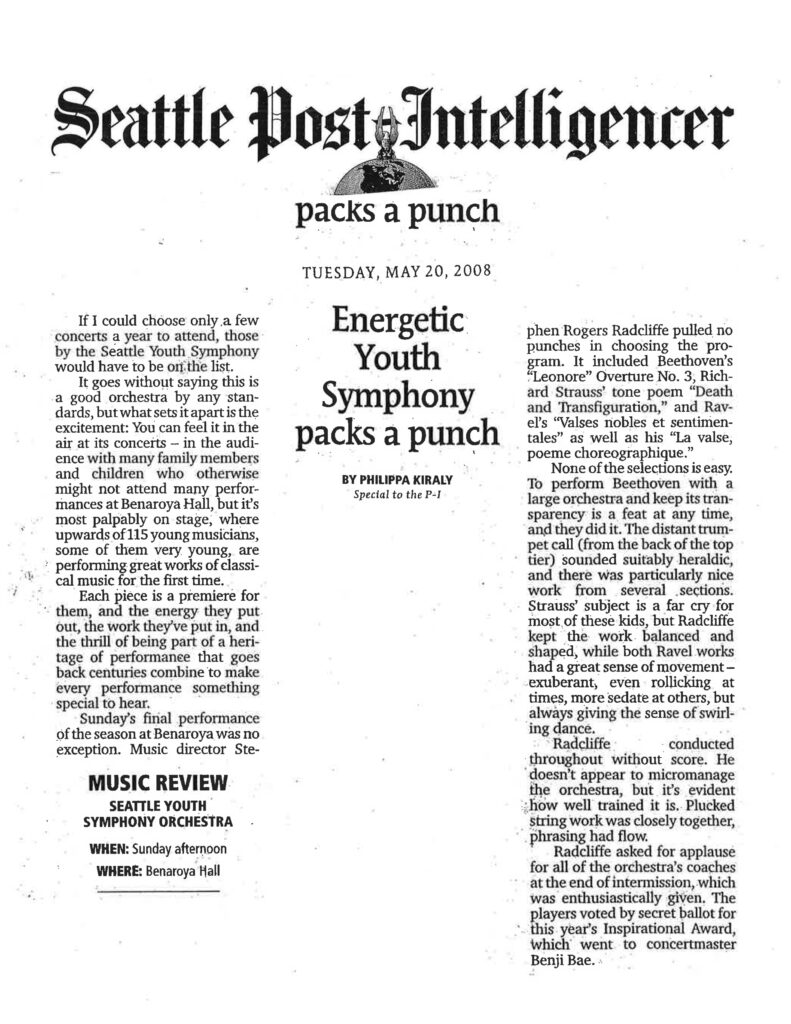
Energetic Youth Symphony Packs a Punch
By Philippa Kiraly
If I could choose only a few concerts a year to attend, those by the Seattle Youth Symphony would have to be on the list.
It goes without saying this is a good orchestra by any standards, but what sets it apart is the excitement: You can feel it in the air at its concerts — in the audience with many family members and children who otherwise might not attend many performances at Benaroya Hall, but it’s most palpably on stage, where upwards of 115 young musicians, some of them very young, are performing great works of classical music for the first time.
Each piece is a premiere for them, and the energy they put out, the work they’ve put in, and the thrill of being part of a heritage of performance that goes back centuries combine to make every performance something special to hear.
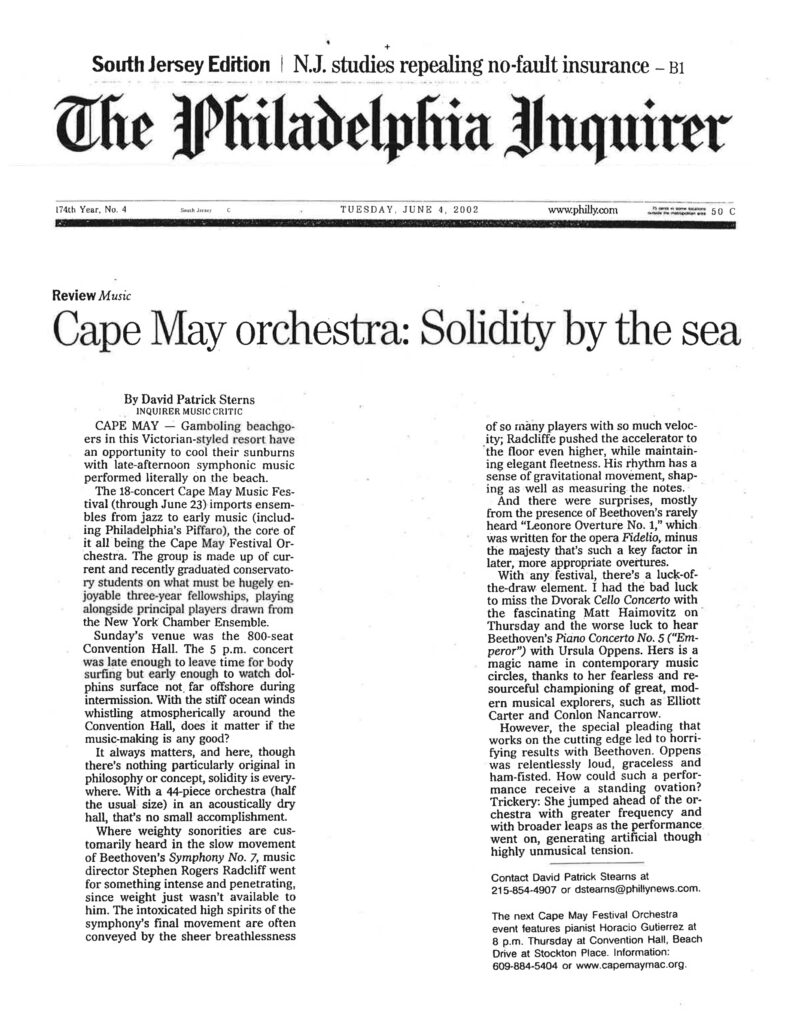
Sunday’s final performance of the season at Benaroya was no exception. Music director Stephen Rogers Radcliffe pulled no punches in choosing the program. It included Beethoven’s “Leonore” Overture No. 3, Richard Strauss’ tone poem “Death and Transfiguration,” and Ravel’s “Valses nobles et sentimentales” as well as his “La valse, poeme choreographique.”
None of the selections is easy. To perform Beethoven with a large orchestra and keep its transparency is a feat at any time, and they did it. The distant trumpet call (from the back of the top tier) sounded suitably heraldic, and there was particularly nice work from several sections. Strauss’ subject is a far cry for most of these kids, but Radcliffe kept the work balanced and shaped, while both Ravel works had a great sense of movement — exuberant, even rollicking at times, more sedate at others, but always giving the sense of swirling dance.
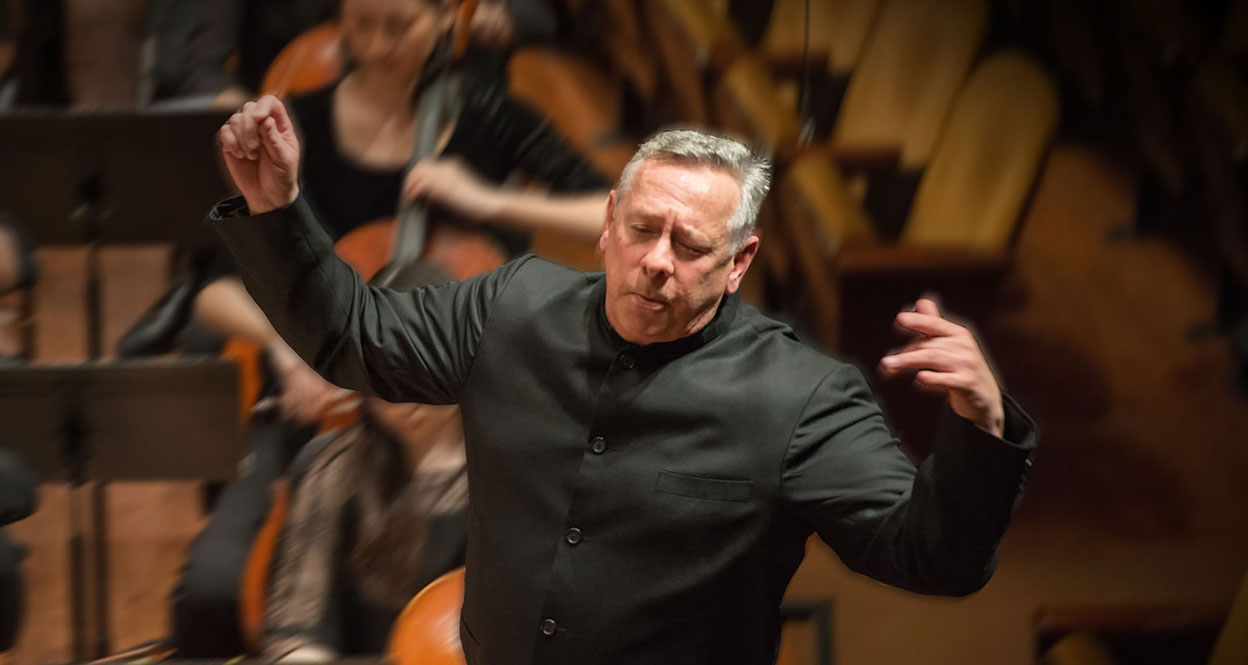
Radcliffe conducted throughout without score. He doesn’t appear to micromanage the orchestra, but it’s evident how well trained it is. Plucked string work was closely together, phrasing had flow.
Radcliffe asked for applause for all of the orchestra’s coaches at the end of intermission, which was enthusiastically given. The players voted by secret ballot for this year’s Inspirational Award, which went to concertmaster Benji Bae.


![Sunday, Feb. 2, 2003 Sioux City Journal Vol. 139 No. 150 • Sioux City, Iowa • METRO EDITION Beethoven performed in seemless fashion during symphony concert By Bruce R. Miller Journal staff writer [REVIEW] At Saturday's Sioux City Symphony concert, pianist Ursula Oppens did what so many guest artists don't. She listened. Throughout Beethoven's Piano Concerto in E-Flat Major, Opus 73, Oppens complemented what the resident musicians did; she didn't just expect them to keep up with her. The result was a seamless performance that must have been as exciting for the orchestra as it was for the audience. Ironically, the piece was one Beethoven wrote after he had lost his hearing. Filled with rapid runs, it could have been a "look at me" turn for the two-time Grammy winner. Instead, Oppens played as if she had been a member of the orchestra for years. Slipping into the stormy duel between the cellos and the violins, she gave the work the understated surprise it needed. In the second movement, she created the piano equivalent of Frank Lloyd Wright's Fallingwater, a fluid aria that got Oppens to embrace the piano and dig into the music's very definite structure. She even nodded her head in ways that suggested the fire of the work's creator. Because the orchestra and the guest artist were so well matched, heat seemed to rise from the stage. In truth, the building's thermostat was set a bit high. But the musicians could have melted ice with their performance. Unfortunately, the first ("Overture to Fidelio") and last (Symphony No. 7 in A Major, Opus 92) offerings didn't have as much heat as the centerpiece. The timpanist was challenged on both, but overwhelmed in the former, impressed in the latter. The oboes got a chance to solo in the symphony as well. But this was really a night for strings. In all three selections, the pace was intense. The workout was a good one. While the overture wasn't as memorable as it could have been, it made the concerto all the more special. The symphony, as a result, was a bit of a let-down, even though it asked more of its players and reeked of the familiar. There were sections that have been lifted for film scores, movements that have served as inspiration for others (including Schubert). The play "Amadeus" made much of Mozart's excess ("too many notes, the royal said). But Beethoven insisted every one he put on paper was important. When the symphony was performed in 1813, Mozart's old nemesis Antonio Salieri led the percussion section. It's easy to see the necessity of every melody, counter-melody and beat. The stuff works because it's so intricate. One look at conductor Stephen Rogers Radcliffe revealed as much. He got the best exercise of all. And he enjoyed the perks of a guest performer who wasn't around for the glory. She was there for the workout, too.](https://stephenrogersradcliffe.com/wp-content/uploads/jupiterx/images/2003_02_02_Sioux_City_Journal_Feb_2_2003-scaled-6393e69.jpg)

![Sunday, Feb. 2, 2003 Sioux City Journal Vol. 139 No. 150 • Sioux City, Iowa • METRO EDITION Beethoven performed in seemless fashion during symphony concert By Bruce R. Miller Journal staff writer [REVIEW] At Saturday's Sioux City Symphony concert, pianist Ursula Oppens did what so many guest artists don't. She listened. Throughout Beethoven's Piano Concerto in E-Flat Major, Opus 73, Oppens complemented what the resident musicians did; she didn't just expect them to keep up with her. The result was a seamless performance that must have been as exciting for the orchestra as it was for the audience. Ironically, the piece was one Beethoven wrote after he had lost his hearing. Filled with rapid runs, it could have been a "look at me" turn for the two-time Grammy winner. Instead, Oppens played as if she had been a member of the orchestra for years. Slipping into the stormy duel between the cellos and the violins, she gave the work the understated surprise it needed. In the second movement, she created the piano equivalent of Frank Lloyd Wright's Fallingwater, a fluid aria that got Oppens to embrace the piano and dig into the music's very definite structure. She even nodded her head in ways that suggested the fire of the work's creator. Because the orchestra and the guest artist were so well matched, heat seemed to rise from the stage. In truth, the building's thermostat was set a bit high. But the musicians could have melted ice with their performance. Unfortunately, the first ("Overture to Fidelio") and last (Symphony No. 7 in A Major, Opus 92) offerings didn't have as much heat as the centerpiece. The timpanist was challenged on both, but overwhelmed in the former, impressed in the latter. The oboes got a chance to solo in the symphony as well. But this was really a night for strings. In all three selections, the pace was intense. The workout was a good one. While the overture wasn't as memorable as it could have been, it made the concerto all the more special. The symphony, as a result, was a bit of a let-down, even though it asked more of its players and reeked of the familiar. There were sections that have been lifted for film scores, movements that have served as inspiration for others (including Schubert). The play "Amadeus" made much of Mozart's excess ("too many notes, the royal said). But Beethoven insisted every one he put on paper was important. When the symphony was performed in 1813, Mozart's old nemesis Antonio Salieri led the percussion section. It's easy to see the necessity of every melody, counter-melody and beat. The stuff works because it's so intricate. One look at conductor Stephen Rogers Radcliffe revealed as much. He got the best exercise of all. And he enjoyed the perks of a guest performer who wasn't around for the glory. She was there for the workout, too.](https://stephenrogersradcliffe.com/wp-content/uploads/2003/02/2003_02_02_Sioux_City_Journal_Feb_2_2003-791x1024.jpg)


![Gramophone September 2001 Brahms • Franck [N] Brahms Serenade in D, Op 11 (nonet version, reconstr Boustead) Franck Pièces brèves (arr Büsser) The New York Chamber Ensemble / Stephen Rodgers Radcliffe Roméo Records 7209 (55 minutes: DDD) A fresh, lyrical account of Brahms’s Serenade in its near-to-original chamber version Brahms’s Serenade No 1 in D major, Op 11, is known largely in the orchestral guise the composer devised in 1859. But he conceived the piece first as a chamber work for flute, two clarinets, horn, bassoon, violin, viola, cello and bass. The original 1858 version, in a reconstruction by Alan Boustead, is the chief fascination on this disc from the New York Chamber Ensemble under Stephen Rodgers Radcliffe. As Clara Schumann suggested to Brahms, the score claimed a symphonic character that seemed to cry out for more instruments. Even so, the chamber version places the music in intimate relief, pointing out the long-breathed lyricism and lilting personality of the pastoral material. Brahms even provided a hint in the orchestral version that he was fond of the smaller incarnation: the Menuetto I and II in the former are scored for flute, two clarinets, bassoon, first violins, violas and cellos. Boustead’s reconstruction may be speculative, but it honours Brahms’s sound world even as it embraces the music’s charm, poetry and moments when the sun slips behind the clouds. The disc’s other novelties are three of Franck’s Pièces brèves, organ miniatures from the last year of the composer’s life orchestrated by Henri Büsser. They are delightful trifles beautifully cast for winds, brasses, strings and percussion. The New York Chamber Ensemble, which made this recording in November 1992, brings ample polish and expressive depth to both scores. The Brahms, from a studio performance, is rendered fresh as motivated by Radcliffe’s judicious tempos and attention to detail and his players’ vibrant interweaving of lines. Donald Rosenberg](https://stephenrogersradcliffe.com/wp-content/uploads/jupiterx/images/Grammophone_Sept_2001-scaled-1246321.jpg)

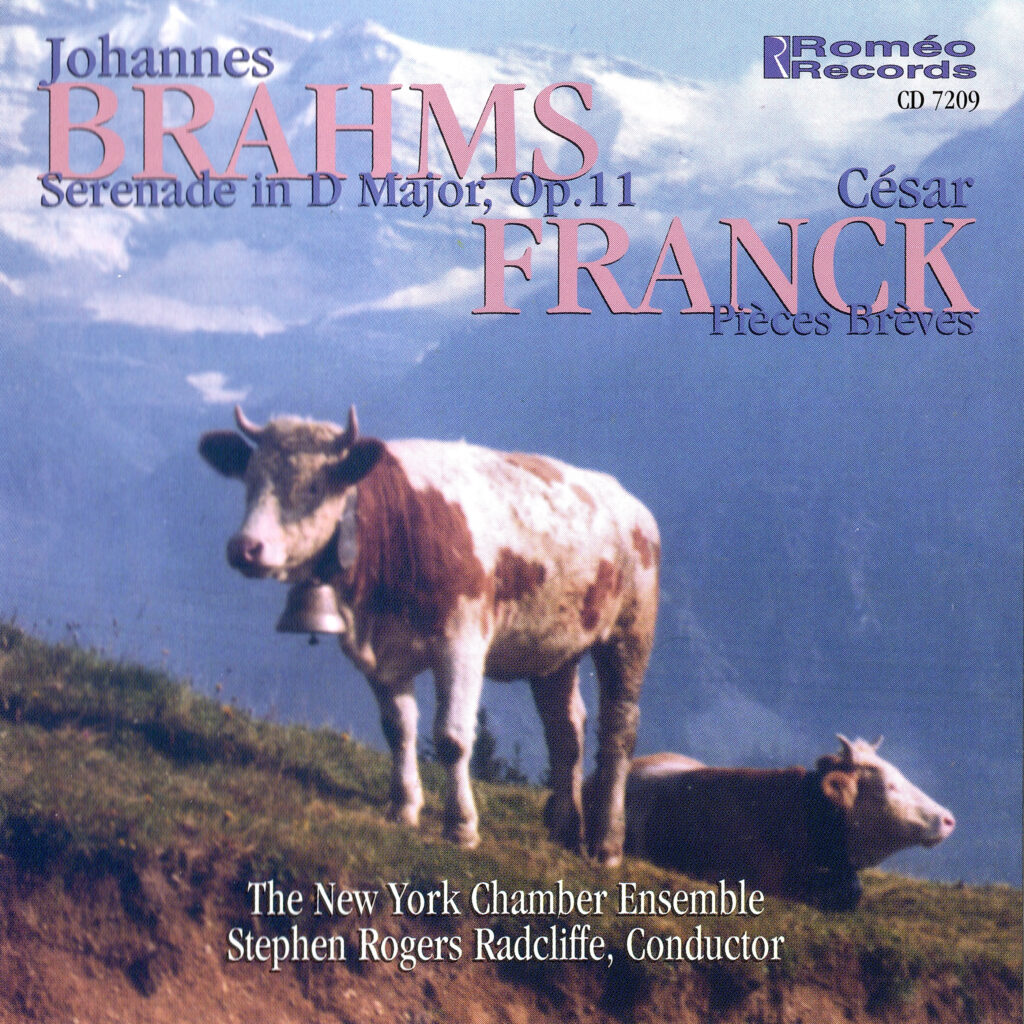
![Gramophone September 2001 Brahms • Franck [N] Brahms Serenade in D, Op 11 (nonet version, reconstr Boustead) Franck Pièces brèves (arr Büsser) The New York Chamber Ensemble / Stephen Rodgers Radcliffe Roméo Records 7209 (55 minutes: DDD) A fresh, lyrical account of Brahms’s Serenade in its near-to-original chamber version Brahms’s Serenade No 1 in D major, Op 11, is known largely in the orchestral guise the composer devised in 1859. But he conceived the piece first as a chamber work for flute, two clarinets, horn, bassoon, violin, viola, cello and bass. The original 1858 version, in a reconstruction by Alan Boustead, is the chief fascination on this disc from the New York Chamber Ensemble under Stephen Rodgers Radcliffe. As Clara Schumann suggested to Brahms, the score claimed a symphonic character that seemed to cry out for more instruments. Even so, the chamber version places the music in intimate relief, pointing out the long-breathed lyricism and lilting personality of the pastoral material. Brahms even provided a hint in the orchestral version that he was fond of the smaller incarnation: the Menuetto I and II in the former are scored for flute, two clarinets, bassoon, first violins, violas and cellos. Boustead’s reconstruction may be speculative, but it honours Brahms’s sound world even as it embraces the music’s charm, poetry and moments when the sun slips behind the clouds. The disc’s other novelties are three of Franck’s Pièces brèves, organ miniatures from the last year of the composer’s life orchestrated by Henri Büsser. They are delightful trifles beautifully cast for winds, brasses, strings and percussion. The New York Chamber Ensemble, which made this recording in November 1992, brings ample polish and expressive depth to both scores. The Brahms, from a studio performance, is rendered fresh as motivated by Radcliffe’s judicious tempos and attention to detail and his players’ vibrant interweaving of lines. Donald Rosenberg](https://stephenrogersradcliffe.com/wp-content/uploads/2001/09/Grammophone_Sept_2001-360x1024.jpg)

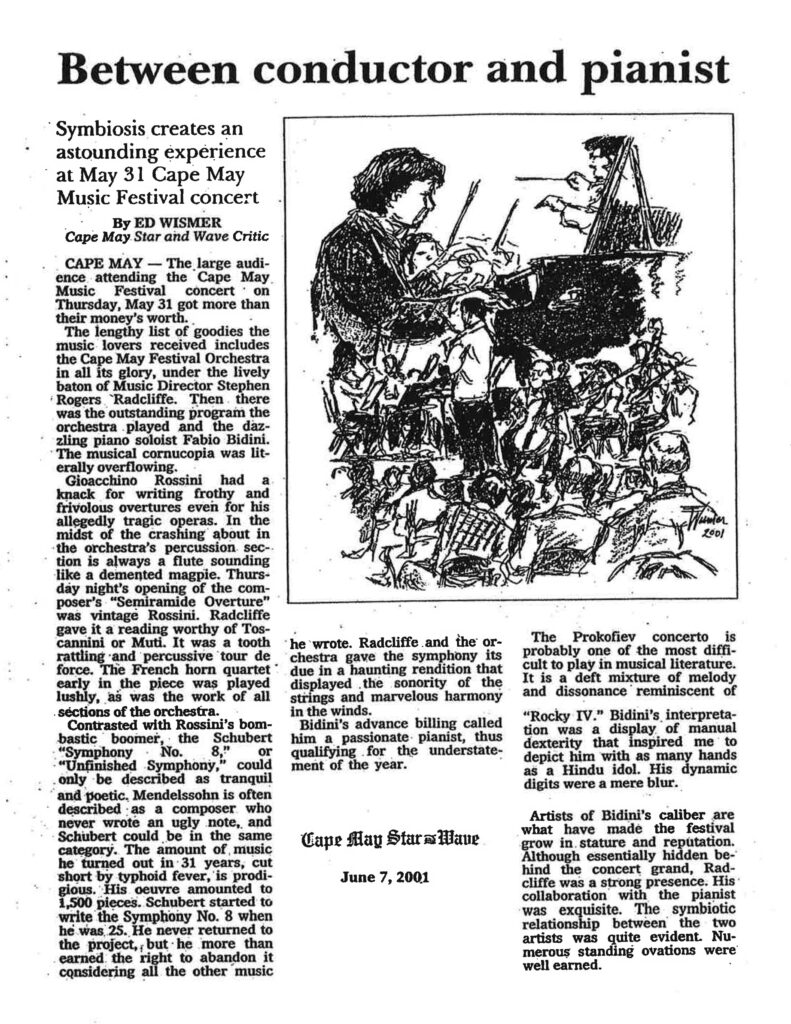



![Sioux City Journal April 12, 1998 Orchestra presents monumental symphony in ‘The Resurrection’ By Judi Hazlett Journal staff writer [Review] There may be bigger orchestras performing Mahler in bigger cities, but you’ll have to look long and hard to find any that will beat what happened right here in Sioux City Saturday night. It was a monumental musical event as the Sioux City Symphony Orchestra played a monumental symphony. Gustav Mahler’s Symphony No. 2, "The Resurrection," is a work of gigantic imagination and creativity in itself, but performing it takes on superhuman proportions. For the orchestra, its length and challenges loom large. Logistically, to get a huge orchestra on the stage at Eppley Auditorium, plus a huge chorus, two soloists and the conductor takes more than just a bit of doing. But the SCSO did it — with lots of style, class and panache, thanks to music director and conductor Stephen Rogers Radcliffe. He kept everything together in a performance that was sustained and deliberate, through the revealing slow and soft parts as well as the Mahler "tornadoes" that whirl everything up and around, then just as quickly suspend you in the storm’s peaceful center before whirling you around some more. Radcliffe never rushed it, but kept it unfolding and growing right into the magnificent finale of the fifth movement. That’s when the meaning of the word resurrection hits home. Out of Mahler’s beginning first movement — a funeral march — themes move through four more movements with moments depicting earthly bliss, turmoil, despair, mourning and the ever-present specter of death. Finally, Mahler realizes death can be transcendent, which, as Radcliffe pointed out, makes this symphony an appropriate one for the resurrection of Christ celebrated by Christians at Easter. The fourth movement introduces a solo voice but the fifth movement pulls out all the stops. It featured knockout performances by mezzo soprano Lucille Beer and soprano Sara Seglem as soloists. Their voices were added to the smooth, full vocalizations of the combined voices of the Siouxland Master Chorale, directed by Gregory Fuller; the Northwestern College Choir, directed by Kimberly Utke; the Wayne State College Choir, directed by David Lawrence; and the Siouxland Community Chorus, directed by Shirley Neugebauer-Luebke. As good as this all was, the evening really belonged to the orchestra, which underwent a resurrection of its own with Saturday’s performance. The musicians play almost every minute of the two and a half hour work, and work it is. Kudos to the brass and horns, which were brilliant, and the strings for providing the glue. Clearly there are the resources here for big works like this.](https://stephenrogersradcliffe.com/wp-content/uploads/jupiterx/images/1998_04_12_Sioux_City_Journal_April_12_1998-scaled-ad2ddd4.jpg)
![Sioux City Journal April 12, 1998 Orchestra presents monumental symphony in ‘The Resurrection’ By Judi Hazlett Journal staff writer [Review] There may be bigger orchestras performing Mahler in bigger cities, but you’ll have to look long and hard to find any that will beat what happened right here in Sioux City Saturday night. It was a monumental musical event as the Sioux City Symphony Orchestra played a monumental symphony. Gustav Mahler’s Symphony No. 2, "The Resurrection," is a work of gigantic imagination and creativity in itself, but performing it takes on superhuman proportions. For the orchestra, its length and challenges loom large. Logistically, to get a huge orchestra on the stage at Eppley Auditorium, plus a huge chorus, two soloists and the conductor takes more than just a bit of doing. But the SCSO did it — with lots of style, class and panache, thanks to music director and conductor Stephen Rogers Radcliffe. He kept everything together in a performance that was sustained and deliberate, through the revealing slow and soft parts as well as the Mahler "tornadoes" that whirl everything up and around, then just as quickly suspend you in the storm’s peaceful center before whirling you around some more. Radcliffe never rushed it, but kept it unfolding and growing right into the magnificent finale of the fifth movement. That’s when the meaning of the word resurrection hits home. Out of Mahler’s beginning first movement — a funeral march — themes move through four more movements with moments depicting earthly bliss, turmoil, despair, mourning and the ever-present specter of death. Finally, Mahler realizes death can be transcendent, which, as Radcliffe pointed out, makes this symphony an appropriate one for the resurrection of Christ celebrated by Christians at Easter. The fourth movement introduces a solo voice but the fifth movement pulls out all the stops. It featured knockout performances by mezzo soprano Lucille Beer and soprano Sara Seglem as soloists. Their voices were added to the smooth, full vocalizations of the combined voices of the Siouxland Master Chorale, directed by Gregory Fuller; the Northwestern College Choir, directed by Kimberly Utke; the Wayne State College Choir, directed by David Lawrence; and the Siouxland Community Chorus, directed by Shirley Neugebauer-Luebke. As good as this all was, the evening really belonged to the orchestra, which underwent a resurrection of its own with Saturday’s performance. The musicians play almost every minute of the two and a half hour work, and work it is. Kudos to the brass and horns, which were brilliant, and the strings for providing the glue. Clearly there are the resources here for big works like this.](https://stephenrogersradcliffe.com/wp-content/uploads/1998/04/1998_04_12_Sioux_City_Journal_April_12_1998-791x1024.jpg)